





Living in a space without natural light can feel draining. It’s hard to find energy or focus in a windowless room. But you can change your home into a vibrant, healthy place.
- The Psychology of Inhabiting Windowless Spaces
- Core Principles of Biophilic Design for Windowless Rooms
- Mimicking Natural Daylight with Smart Lighting Solutions
- Bringing Nature Indoors with Resilient Plant Life
- Enhancing Your Environment with Sensory Elements
- Improving Air Quality and Airflow in Enclosed Areas
- Practical Design Tips for a Restorative Atmosphere
- Conclusion
Biophilic design brings the outdoors inside for windowless rooms. It’s a human-centered approach that boosts your well-being every day.
A windowless room doesn’t have to feel dark and isolated; adding greenery can improve the indoor atmosphere. You can make your space feel alive with nature-inspired elements. These elements promote wellness and comfort for the long term.
This guide will show you how to make any enclosed area a restorative retreat. Learn to turn any space into a place that feels alive and refreshing every day.


The Psychology of Inhabiting Windowless Spaces
Ever felt tired in rooms without windows? Your brain needs natural light to stay in sync with your circadian rhythm. Without it, you lose connection to the outside world.
Being in a room without windows can upset your nervous system. You might feel your heart beat faster or your blood pressure go up. These signs show your space isn’t good for you.



But you can make your space better. Adding elements that remind you of nature can help. This can make your brain release dopamine, improving your mood and helping to lower stress.
Changing your environment can boost your productivity. A space that feels alive helps you stay focused. Turning a windowless area into a calm spot is key to better health.
Core Principles of Biophilic Design for Windowless Rooms
Biophilic interior design is a powerful way to connect with nature at home or work. It focuses on making spaces restorative and human-centered. This way, you can feel connected to the outdoors even without windows.
To make this work, focus on elements that remind you of nature. Adding organic patterns to your decor can make a big difference in creating a calming aesthetic. These patterns make your space feel more welcoming and alive.



Think about how your surroundings affect your mood and work. Using natural materials like wood or bamboo can make your space feel grounded. These materials offer a sensory experience that strengthens your connection to nature.
By carefully choosing each design element, you create a space that supports your well-being. Biophilic design helps you flourish in any setting, no matter the architecture.
Mimicking Natural Daylight with Smart Lighting Solutions
Your body needs specific light cues to stay healthy. Without windows, you miss these important signals. This can make you feel tired during the day or too awake at night.
Traditional fluorescent lights don’t work well because they’re always the same. They don’t change like natural daylight, which can disrupt your circadian rhythm. This can hurt your sleep quality. Smart lighting can help by mimicking the sun’s movement and meeting your body’s needs.
Modern systems let you change light colors to match the day. In the morning, they use cool, bright tones to wake you up. As evening comes, they switch to warmer colors to help you relax.
Place these smart lights to make your room feel like it has a skylight, helping to regulate your circadian rhythm. This way, light bounces off ceilings and walls, making the room feel bigger. It helps your body keep a healthy rhythm, even indoors.
Choosing dynamic lighting is a smart move for better health. It makes your space feel refreshing and alive. Your home or office can now give your body the rhythm it needs.
Bringing Nature Indoors with Resilient Plant Life
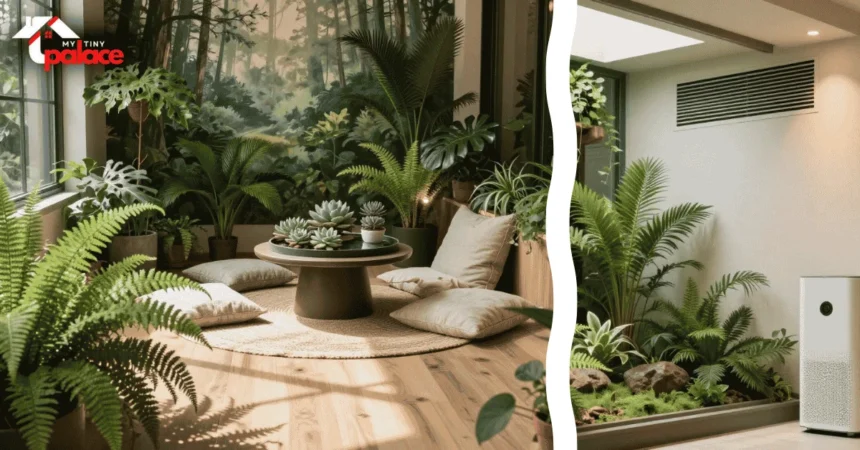
Bringing nature indoors can soften a room’s harsh edges, even without windows. A lack of natural light can make a room feel sterile. But by choosing hardy plants, you can create a lush space that thrives in low light.
Choose plants that do well in low light, like snake plants, pothos, and peace lilies. These are great for both new and experienced plant owners. They’re tough and will grow well, even in hidden corners of your home.
For your plants to stay healthy and enhance the aesthetic of your space, pick the right pot and soil. A good pot with drainage stops root rot, a common problem in closed spaces. Use a potting mix that lets your plants breathe and get nutrients.
Arrange your plants to create a mini landscape in your room. Mix different heights and leaf shapes to add life and depth, creating a more inviting indoor environment. This simple step can turn a windowless room into a cozy and welcoming space.
Enhancing Your Environment with Sensory Elements
Creating a restful environment is more than just looks. Windowless rooms often lack the stimulation our senses need. Engaging our hearing and touch can greatly improve our focus and well-being.
Adding natural elements can change a room’s feel. They break up the dullness of walls and offer a fresh experience, enhancing the overall aesthetic. A small desktop fountain, for example, brings the calming sound of water to your desk.
Water features do more than just sound good. They also fill the silence that can feel heavy in closed rooms. The sound of a fountain can help you relax and stay calm, even when you’re busy. It makes your space feel more alive and supports your mental health.
By adding different sensory elements, you make your room a special place. Mixing soft textures, nice smells, and sounds creates a space that helps you succeed. This careful planning makes your environment a place where you can flourish every day.
Improving Air Quality and Airflow in Enclosed Areas
Without windows, finding ways to get fresh air is key. Working or relaxing in a room without windows means you must focus on air quality. This keeps you alert and comfortable, contributing to a healthier indoor environment.
Good airflow is vital for feeling energized all day. Stagnant air can make you feel tired and uncomfortable. By improving circulation, you make your space more breathable and help regulate your circadian rhythm.
Installing a HEPA filtration system can greatly improve air quality. These filters are great at removing pollutants and allergens. Using them regularly ensures fresh air, even without natural breezes.
Adding mechanical ventilation fans also helps a lot. They push out stale air and bring in cleaner air. This simple step makes a big difference for those spending lots of time indoors.
Lastly, keep your space clean to avoid dust buildup. Regularly changing air filters keeps your air fresh. These small steps make your room a better place to be.
Practical Design Tips for a Restorative Atmosphere
Turning a windowless room into a peaceful space needs careful design. Focus on certain tips to make a small area feel open and meaningful. The aim is to create a space that boosts your mood all day.
Begin by adding rich textures to your decor for depth. A natural rug or soft furniture adds a grounding feel. These touches engage your sense of touch, balancing the lack of natural light.
Use a curtain to make a room feel more open. Hanging a curtain from floor to ceiling tricks your brain into seeing more space. This simple trick makes the room feel less cramped.
Choosing the right color tone is key. Soft, neutral colors make a room feel bigger and more welcoming. Materials that reflect light keep the space bright and inviting, avoiding darkness.
Your design choices should mix comfort and function. The right weave, color, and layout create a peaceful retreat. Every detail makes your home feel open, calm, and connected to your needs.
Conclusion
To make a windowless room restorative, you need to make smart choices. These choices should respect your body’s needs. You can turn any enclosed space into a lively place for your well-being.
Use smart technology and natural elements together for the best results. Philips Hue’s lighting systems can feel like the sun. The Sill’s Snake Plants clean the air naturally. These tools help keep you healthy over time by reducing stress and improving your overall well-being.
Even small changes can make a big difference in how you feel. Pick one area of your room to improve this week. By focusing on biophilic design, you create a space that’s good for your mind and body.
Don’t be afraid to share your progress with others. Your efforts to make your home more natural can inspire them to do the same and embrace greenery. Keep finding new ways to bring nature indoors to stay healthy.