





Living or working in a place without windows can feel lonely and tiring. It messes with your body’s clock, making you feel sluggish and unfocused. But there’s a way to make these areas bright and healthy.
Modern tech lets you light up your space like the sun. It works by matching the light your body needs to stay energized. This way, you can keep your energy up all day.
When you can’t get natural light, finding the right solution is key. We’ll show you how to support your body’s natural rhythm indoors. With the right tools and natural daylight, you can make your day better and feel more alive.
Understanding the Science of Circadian Lighting for Dark Rooms
Our bodies are closely tied to the natural light and dark cycles. Our internal clock, or biological clock, uses these signals to keep us running smoothly.



Being in a dark room can make it hard for our bodies to get these signals. This is why circadian lighting is key to our health.
The human eye has special cells that pick up light and help regulate our sleep-wake cycle. These cells have a protein called melanopsin. It sends signals to our brain about the time of day.



These signals go to the pineal gland. It controls how much melatonin we make. Melatonin helps us stay awake during the day and sleep at night.
Using bad artificial light can mess with melatonin production. This can make us feel tired when we should be working.
Light affects our mood and energy levels. Using the right circadian lighting helps keep our sleep cycle healthy.


Without the right balance, we risk messing with our circadian rhythms. This can harm our health over time. Choosing the right light settings helps our bodies meet their needs.
Controlling our environment helps us stay focused and maintain our sleep-wake cycle. Good lighting keeps our internal clock in sync with our daily routine.
Key Principles of Circadian Lighting Design
Learning about circadian lighting design is key to making dark rooms bright. It’s about how light intensity and color affect your alertness. Choosing the right light source can help meet your body’s needs.
Try to match the natural light of sunrise and sunset. Adjust your light’s color temperature to follow this pattern. This helps keep your body’s rhythm even without natural light.
The concept of melanopic lux is crucial. It measures how light affects your eye’s photoreceptor cells. Managing light levels helps set your internal clock.
Layered lighting lets you control light timing precisely. Bright light in the morning boosts energy. Later, reduce blue light to get ready for sleep.
Quality of light is important for comfort and function. Use cool, blue tones for morning and warm tones for evening. This keeps you alert and relaxed.
The total light amount is as important as its spectrum. Balancing these creates a space that feels as fresh as the outdoors. Proper planning makes your space feel welcoming.
Selecting the Right Lighting Solutions for Your Space
Creating a functional room without windows starts with the right lighting. You need to balance ambient and task lighting to avoid eye strain and glare. Layered lighting makes sure every part of your space is comfortable and productive.
During the day, you want to stay alert. Use a strong overhead light to mimic the sun’s light and illuminate your space effectively. This bright light keeps you focused. Choose LEDs with a higher CCT for a natural, energizing feel.
It’s key to control light levels in your room to avoid too much blue light at night. Use dimmable switches or smart bulbs to adjust the light. This lets you switch from a bright workspace to a cozy evening spot.
Adding Wall Sconces and Floor Lamps for Ambient Glow
For extra light, a lamp can make a big difference. Wall sconces offer soft, ambient light that fills a room without harsh shadows. They create a warm, inviting atmosphere when you want to move away from overhead lights.
A floor lamp is a versatile light source that you can move as needed. Adding these fixtures lets you control the light in your home. Whether you need a bright room or a cozy spot, these additions balance your daily needs. Always pick high-quality light bulbs to make your space look great.
Implementing Circadian Lighting Systems in Windowless Environments
Creating a healthy space without windows starts with the right artificial light to simulate natural daylight. You need advanced circadian lighting systems to mimic day and night. This helps keep your body’s internal clock in sync, even in a dark room with limited natural daylight.
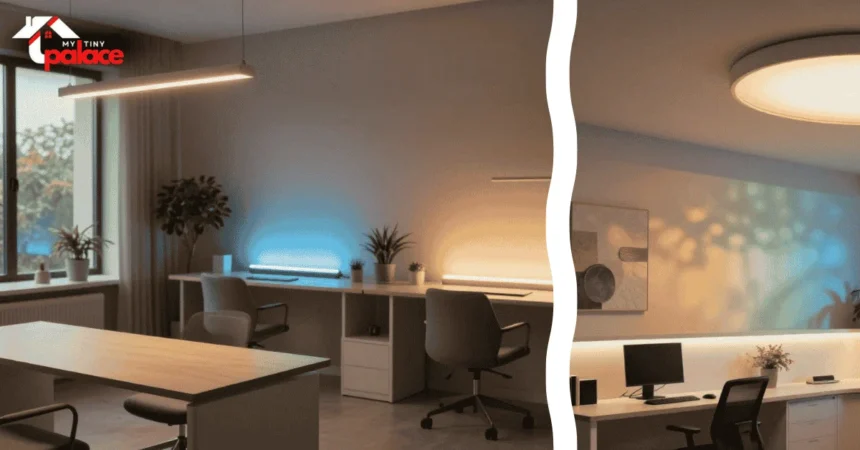
Start by swapping out regular bulbs for smart LEDs. These can change color temperature to match the day. In the morning, they offer cool, bright light to wake you up. Later, they switch to a warmer glow for the evening.
Next, update your room’s lighting fixtures to enhance brightness. Add task lights for focused work and ambient lights for even coverage. Light therapy devices help keep your light exposure consistent, supporting your health.
It’s crucial to manage the amount of light you use to avoid disrupting circadian rhythms. Avoid bright lights at night to prevent sleep issues. Instead, use dim light before bed to signal it’s time to sleep.
By following these steps, you can make any windowless area bright and welcoming. A well-designed artificial light setup makes your space feel natural and refreshing. Sticking to a schedule boosts your energy levels every day.
Health and Well-Being Benefits of Proper Illumination
Lighting does more than just help you see. It shapes your internal biology. By controlling light, you influence your mood and wakefulness.
Your body has a complex biological clock that is influenced by the amount of light it receives. Light tells it when to be active and when to rest. This helps your body work well, even in places without windows, by providing adequate brightness.
The pineal gland is key in this process of regulating our sleep-wake cycle. It manages melatonin production. Bright light during the day keeps you alert by suppressing melatonin.
As night falls, dim light lets your body make melatonin, crucial for maintaining a healthy sleep-wake cycle. This signals sleep time. Harsh light can make it hard to sleep well.
In places like patient rooms, light control is crucial. It helps patients keep a regular sleep cycle. This is important for healing.
Regular light exposure during the day keeps your internal clock in sync. This leads to better sleep. By focusing on good lighting, you help your body stay in balance.
Conclusion
Creating a space without natural windows means changing how you think about light. Using advanced circadian lighting systems lets you control your body’s clock, even in the darkest rooms.
Lighting affects how you feel and how well you work. Investing in top-notch light therapy devices brings the outdoors inside. This meets today’s standards for healthy living.
By mimicking the sun’s color changes, you can sleep better. This helps you wake up feeling good. A well-lit environment is key to a good night’s sleep.
Start checking your lighting today. Even small changes can make a big difference in your health. Share your improvements to help others create better homes.