






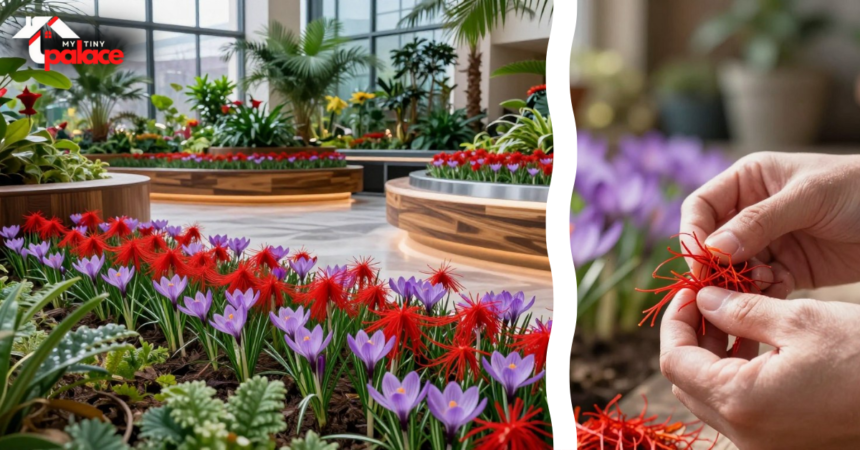
A Luxury Indoor Garden Features the Vibrant Red Threads to Grow Saffron Indoors
Creating a luxury home garden lets you grow your own exotic spices. Growing saffron indoors adds elegance and sophistication to your home.
Many people choose to grow saffron at home because it’s pricey to buy quality spice. It turns a hobby into a rewarding and practical activity for food lovers.
By focusing on the vibrant red stigmas, you get the best flavor and look. Each delicate thread adds a unique quality to your dishes. This guide will help you manage your own collection of these precious saffron threads.
Understanding the Basics of Saffron Cultivation
Learning to grow saffron starts with knowing the crocus’s life cycle. To grow saffron at home, first get high-quality, disease-free corms from a trusted supplier. These bulbs, known as Crocus sativus, are the base of your indoor garden.

When to plant is key to growth. Saffron corms are best planted in late summer or early fall. This timing lets the saffron plants grow roots before the cold weather comes, ensuring a strong start.


Knowing the dormancy period is crucial. During this time, the bulb rests, a natural part of its growth. Letting the saffron plants rest keeps them healthy and ready for the next cycle of growth.
Most saffron is grown in Iran, but you can grow it indoors too. By creating the right environment, you can get high-quality saffron at home. With proper care, your saffron crocus will flourish, giving you those valuable, bright threads.
How to Grow Saffron Indoors Step-by-Step
Growing saffron at home is a rewarding project. It brings the world’s most expensive spice to your windowsill. Start by choosing a pot with good drainage to keep your saffron plants healthy and thriving.
Fill the container with a high-quality, loamy potting mix that provides well-draining soil for your saffron plants. This mix prevents fungal diseases and root rot.

When planting the corms, make sure the pointed end faces upward. Place each bulb 3–4 inches deep in the soil. Space them 4–6 inches apart for proper aeration.
Put your containers in a south-facing window for at least 6 hours of direct sunlight a day. If you don’t have natural light, use grow lights for 6–8 hours of light. This is key for your crocus to bloom.
Keep a close eye on your indoor saffron. Water only when the soil feels dry. Avoid overwatering, which can damage the bulbs. With proper care, you’ll see your saffron flowers bloom in October or November.
Optimizing Your Indoor Garden Environment
To grow saffron indoors, you need the right light, well-draining soil, and moisture to support the saffron plants. Choose a loamy potting mix that drains well to avoid fungal diseases. This mix is key for your saffron to grow well.
Make sure your pot is deep enough for the roots to grow. Plant the corms 3–4 inches deep and keep them 4–6 inches apart. This spacing helps with air circulation and prevents the corms from getting too close.
Light is crucial for your saffron. It needs at least 6 hours of direct sunlight a day. If natural light is scarce, use grow lights for 6–8 hours a day. This ensures your saffron gets enough light to thrive.
Watering must be done carefully to avoid overwatering. Water only when the soil feels dry. Even though saffron is easy to care for, a balanced fertilizer during growth helps it stay healthy.
Watch out for pests with a light neem oil spray. Keep the soil draining well to create the best environment for your saffron. With these tips, you can have a successful indoor garden.
Harvesting and Preserving Your Saffron Threads
When autumn arrives, your saffron flowers will bloom. Watch your indoor garden closely, as the time to harvest is short. Each flower has three red stigmas, which are the spice’s essence.
Use your fingers or tweezers to carefully pick the stigmas. This method ensures you get the best saffron without harming the plant. You’ll smell the unique aroma of the fresh stigmas right away.
Put the threads of dried saffron on a clean paper towel to dry properly. This step is key to focusing the flavor and potency. Once dry, your saffron is ready for storage.
Put your spice in an airtight container and store it in a dark, cool spot. Even a small amount of saffron from home is enough for your cooking. Enjoy using your own saffron in your favorite dishes.
Conclusion
Adding saffron to your kitchen is a rewarding project. You can grow your own saffron by mimicking the perfect conditions found in Iran. This way, you can avoid the high cost of store-bought saffron and become self-sufficient.
The Crocus sativus plant is easy to care for indoors. It needs the right light and balanced fertilizer during its growing season. This ensures your corms multiply, giving you more saffron in the future.
Each flower of the plant has three red stigmas, packed with flavor and potency. After harvesting, dry the stigmas on a paper towel. Then, store them in an airtight container to keep them fresh for months.
Growing saffron takes patience, but with the right care, the outcome of dried saffron is worth it. You might not produce a lot, but your saffron will be fresh and of high quality. Whether you grow saffron indoors or outdoors, it connects you to a long tradition of farming and satisfies your saffron needs.
As you get better at growing saffron, you’ll see your efforts pay off with a bountiful harvest of saffron bulbs. Every successful harvest shows that high-quality spice is within reach for anyone willing to learn. Start your journey today and enjoy making your own gourmet ingredients like dried saffron.