




Creating a dedicated space for your daily tasks is vital for long-term health. Many remote workers struggle with physical strain because they overlook the setup of their environment. By focusing on your workspace, you can significantly boost your daily productivity while working at home.
Proper alignment is the foundation of a healthy routine. When you prioritize your posture, you reduce the physical toll often associated with modern digital tasks and enhance health and safety. Implementing an essential ergonomic strategy helps you avoid common aches and pains that hinder your focus.
A well-designed home office serves as a hub of comfort and efficiency. Understanding these foundational concepts is the first step toward transforming your area into a professional sanctuary. You will soon discover how small changes in your setup lead to better results. Ultimately, applying these principles shows how smart home ergonomics can make a lasting difference in your career success.
The Foundation of Smart Home Ergonomics
Mastering the basics of smart home ergonomics can change your daily life. A strong foundation for your home office ergonomics, including an ergonomic chair, is key. It helps prevent long-term health problems caused by poor ergonomics.


Workplace ergonomics is about how your body interacts with digital tools. Ignoring these basics can lead to chronic pain or fatigue. An essential ergonomic setup makes sure your furniture and devices support your natural posture.



Knowing the science of ergonomics helps you create a lasting environment that promotes health and safety. You should align your monitor, chair, and desk to support your body all day. This approach helps you avoid common problems with poor ergonomics in today’s digital world.
Being consistent is crucial for keeping your body comfortable. By learning these basic concepts, you protect your health and increase your productivity. A well-thought-out home office ergonomics plan keeps you energized and focused at work.
Optimizing Your Workstation Setup for Productivity
Turning your workspace into an ergonomic haven is easy with a few tweaks. Your desk and chair setup greatly affects your productivity and health. By improving your workstation, you can lessen the harm of sitting too long.
Positioning Your Chair and Backrest
Your ergonomic chair is key to a good home office setup. Make sure it’s adjustable to fit you. A slight recline helps spread your weight, easing spine pressure during long work sessions.



Ensuring Forearms are Parallel to the Floor
Keep your arms right to avoid neck pain. Your elbows should be by your sides, with forearms flat on the floor while typing at your office chair. If your desk is too high, try a keyboard tray or an adjustable desk to get into the right position.
Keeping Knees Slightly Higher Than Your Hips
Right leg alignment is key to good sitting posture in your ergonomic chair. Adjust your chair so your knees are a bit higher than your hips. This keeps your feet flat on the floor. If your feet don’t touch the ground, use a footrest to support your lower back.
Maintaining Proper Lumbar Support
Your lower back needs constant care to stay comfortable, especially during prolonged sitting. Use a lumbar cushion if your chair doesn’t support it. Also, place your external monitor or laptop at eye level to avoid leaning forward, which can cause fatigue.
Investing in good ergonomic gear is wise for your career. By following these tips, you’ll create a workspace that supports your body all day. Small changes can make a big difference in your comfort and work quality.
Leveraging Smart Technology for Posture Monitoring
Modern smart home devices offer great tools to help you keep good posture at work. They give you feedback on your sitting position and make sure your back is supported. These tools act like a digital coach, helping you avoid bad posture.
Preventing back pain is easier with regular breaks. Use an app or voice commands to remind you every 20 to 30 minutes. Moving around every 20 minutes keeps your muscles active and prevents static positions.
Many people have forward head posture from using smartphones incorrectly. A bad habit is holding the phone against your ear and shoulder, straining your neck. Use a headset or speakerphone to keep your spine straight and comfortable.
Smart ergonomics also help with your chair setup. Advanced sensors track your seat and backrest to keep your lumbar aligned. If you slouch, these devices will remind you to adjust or add a cushion.
Keeping an eye on your health is crucial for long-term comfort. By adding these smart devices to your office, you make a space that supports your health. Small changes each day can greatly improve your health and reduce the risks of prolonged sitting.
Lighting and Environmental Health in Your Workspace
Your workspace needs more than just a good chair for long-term health. Environmental health is key, but often ignored in home offices. By improving your surroundings, you can boost comfort and productivity.
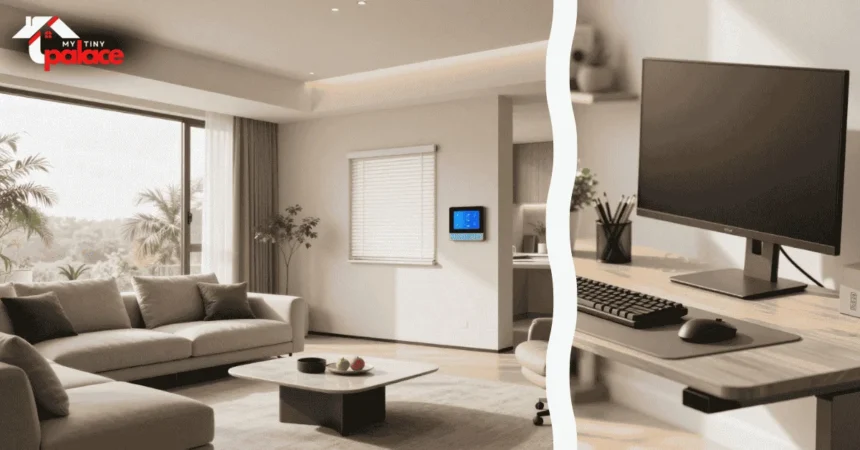
Smart lighting is a great way to enhance your workspace. Harsh overhead lights can cause glare on screens, making your eyes work too hard. Smart devices can adjust the room’s color and brightness to match the day.
Automated systems help reduce eye strain by matching light levels to your natural rhythm. This prevents fatigue and poor posture. A consistent, soft glow keeps your focus sharp during long hours.
Adding smart home devices to your office lets you control your environment easily. This is crucial for maintaining good ergonomics in your work-from-home setup. An optimized environment supports both physical and mental health.
Don’t underestimate the effect of light on your well-being. Smart lighting is a step towards a healthier work environment for those who work from home. A well-lit area is essential for a professional and comfortable home office.
Integrating Smart Furniture for Dynamic Movement
You can change your workspace with smart furniture that promotes movement. This smart ergonomics helps avoid the dangers of sitting too long. It keeps your body moving while you work.
Today’s desks and chairs switch easily between sitting and standing. You can change their height with an app or voice command. This makes it easy to move around every 20 to 30 minutes.
Smart technology helps you stay focused and healthy. It monitors your posture, alerting you to any slouching that could lead to neck strain. This prevents long-term discomfort and keeps you energized at work.
Buying top-notch ergonomic furniture is good for your health. It reminds you to stand up every 20 minutes. An adjustable chair supports your body all day long.
Managing Peripheral Devices and Input Comfort
Setting up an ergonomic workspace begins with the tools you use daily. It’s key to manage your devices well to avoid injuries like carpal tunnel. Choosing the right gear for your home office is crucial for your health.
Keep your external keyboard and mouse at a comfy angle. Your elbows should be at a 90-degree angle, and your forearms parallel to the floor to ensure a healthy work environment. This setup keeps your wrists straight, preventing strain.
Make sure your monitor or laptop is at eye level. This helps your neck and spine stay healthy. It also cuts down on eye strain and prevents fatigue from looking down too long while using ergonomic equipment.
Adjusting your screen’s angle can also reduce glare and improve your overall work environment. This is another way to ease eye strain.
Be mindful of how you use your smartphone at work. Don’t hold it against your ear and shoulder, as it can hurt your neck and back. Use a headset or speakerphone to keep your posture right and avoid pain.
Conclusion
Turning your home office into a productive space starts with caring for your body. Making your workspace safe and healthy is key to success. Small changes in your daily routine can make a big difference in comfort.
Smart technology helps you monitor your body’s habits closely. Health tools alert you to bad posture early on. This helps prevent long-term health problems by catching issues early.
Choosing the right furniture is crucial. Brands like Herman Miller and Steelcase offer support that’s good for your body. Good lighting is also important to avoid eye strain during long hours.
Every gadget you use affects your comfort. Placing your mouse and keyboard right can prevent strain. Ergonomics boosts your energy levels, making the day better.
Start making your workspace better today with ergonomic equipment for better work. Share your ideas with others to help a community of remote workers. Your effort to create a better space keeps you focused and pain-free.