






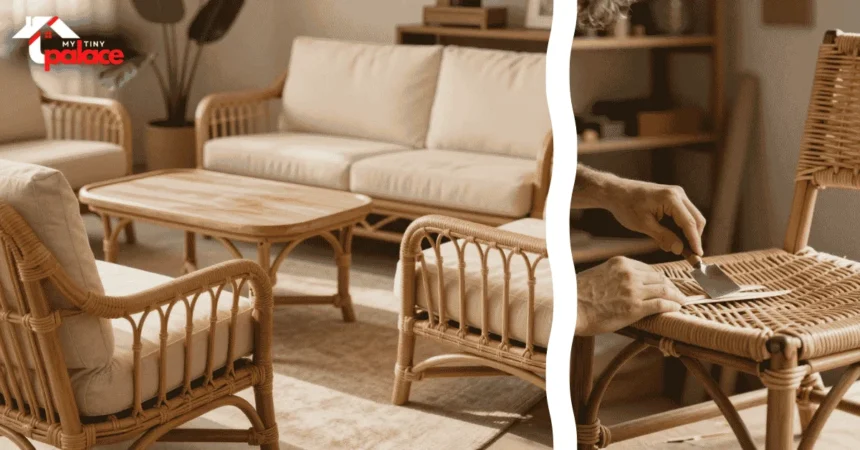
Choosing high-quality furniture for your home adds elegance. When you pick rattan furniture, you protect your investment. It keeps your decor looking good for years.
- Understanding the Anatomy of Rattan and Wicker Furniture
- Essential Tools and Materials for Restoration
- How to Reinforce Rattan Furniture for Maximum Stability
- Addressing Sagging Seats and Woven Surfaces
- Mitigating Environmental Damage from Sunlight and Humidity
- Advanced Repair Strategies for Complex Damage
- Refining the Aesthetic Appeal of Your Restored Assets
- Conclusion
Knowing how your furniture works helps it last longer. Taking care of it today means it will stay beautiful for years. This guide will teach you how to keep your favorite items in great shape.
You’ll learn to spot and fix early signs of damage. This keeps your home stylish and functional. Let’s find out how to keep your furniture looking and feeling great.
Understanding the Anatomy of Rattan and Wicker Furniture
Before starting repairs, it’s important to know the anatomy of your rattan or wicker furniture. Many confuse these terms, but they mean different things. Rattan is a solid material, while wicker is a weaving technique.

Natural rattan comes from a climbing palm, making it strong for indoor use. Synthetic rattan, made from polyethylene, is better for outdoors. Knowing if your furniture is natural or synthetic helps you choose the right cleaning and repair tools.
Look at the weave pattern to see how it was made. A tight weave means high-quality work that needs gentle care. Thin, flexible strips around a frame usually mean cane, a common material in classic designs.



Knowing if your furniture is rattan or wicker helps avoid damage. Whether it’s an old indoor chair or a new synthetic set, identifying the material is key. By understanding these differences, you can restore your furniture the right way.
Always check the frame to see if it’s solid rattan or something else. This step helps avoid expensive mistakes when fixing or replacing parts. Identifying the material correctly is crucial for professional-looking results.
Essential Tools and Materials for Restoration
When you decide to fix rattan or wicker, getting the right supplies is key. Make sure your workspace has everything you need to tackle common problems. You’ll need wood glue, epoxy, and special kits for natural fibers.
Over time, your furniture might start to show wear. You might see broken strands or loose ends that need fixing right away. Using strong adhesives like super glue or hot glue can fix these issues fast. This stops the material from fraying.


For bigger problems, like deep cracks or weak rattan strands, use resin or epoxy. These are great for filling in cracks and strengthening rattan. Keeping these tools ready helps you fix damage before it gets worse.
Regularly check your furniture for loose parts. A quick dab of glue can prevent bigger repairs later. Preparing well makes your restoration project easier and more effective.
How to Reinforce Rattan Furniture for Maximum Stability
Learning to reinforce rattan furniture can make your favorite pieces last longer. Daily use causes wear and tear, but regular reinforcement keeps them sturdy. Taking these steps now prevents bigger problems later.
When joints start to wobble, fix them before the damage gets worse. A good wood glue is best for fixing loose joints. For small, decorative parts, super glue or hot glue works well to hold things together.
Over time, the material might lose its shape. To fix this, dampen the fibers with a warm, moist cloth. Once it’s soft, shape it back and secure loose ends with adhesive.
Fixing broken parts with new rattan is a smart move. This method fixes both looks and strength. It’s a reliable way to repair your rattan furniture.
Regular care is key to keeping rattan furniture in top shape. Fixing small problems early keeps your furniture stable for years. Reinforcing your furniture is a simple way to protect your investment.
Addressing Sagging Seats and Woven Surfaces
Even the best rattan and wicker furniture can start to sag over time. If your chair is sagging, it’s probably because of loose or broken strands. These strands can stretch or snap after years of use.
To fix this, check the underside of the seat for loose ends. You can tighten the weave by pulling the slack toward the frame. Use a bit of wood glue to secure it. If strands are broken, you might need to add a new piece of reed to fix it.
After fixing the structure, you can reshape the surface to keep it comfy. Dampen the area with a warm, moist cloth to make it easier to work with. Then, gently push the weave back into shape before it dries.
To avoid future damage, think about how you use your furniture. Putting a good cushion on the seat spreads out the weight. This helps prevent the material from fraying or sagging too soon. Taking care of your rattan and wicker furniture this way keeps it looking and feeling great for years.
Mitigating Environmental Damage from Sunlight and Humidity
Sunlight and humidity are big enemies of your rattan or wicker furniture. Leaving them outside means they face harsh UV rays and changing weather. This can cause serious damage, affecting both their look and strength.
Natural rattan dries out quickly in the sun, making fibers brittle. This can cause a peel on the surface. Synthetic rattan might not peel, but it can fade or change color if not protected.
Humidity and moisture bring their own problems. In damp places, water can lead to mildew, staining, and weakening the material. If you see mold, clean it fast to stop further damage.
To keep your furniture looking good, use breathable covers when not in use. Also, place it in the shade to avoid direct sunlight. These steps help prevent damage and the need for repairs.
Regular care is key to fighting off the elements. Keeping your rattan clean and dry helps it last longer. With consistent attention, your furniture will stay beautiful and strong for many years.
Advanced Repair Strategies for Complex Damage
Advanced restoration strategies are key to fixing deep cracks and structural failures. When your furniture has major damage, simple adhesives won’t do; you may need to fix rattan furniture properly. You need stronger materials for lasting stability.
Epoxy and resin are great for deep structural cracks. They fill gaps well and harden into a strong finish. This makes your rattan furniture look new again.
Professional wrapping is crucial for a loose-woven seat. It adds the needed strength to prevent further sagging. Make sure to pull the binding tight for support.
For broken pieces, specialized repair kits are essential. These kits have fillers and bonding agents made for wicker furniture. They make fixing broken parts easier for homeowners.
Always clean the area around the crack before applying resin. A clean surface ensures a long-lasting repair. With these methods, you can fix even the most damaged rattan furniture.
Refining the Aesthetic Appeal of Your Restored Assets
Bringing your old rattan pieces back to life needs a keen eye and the right techniques. After fixing the structure, focus on the looks that make a piece stand out. A fresh finish keeps your work looking great for years.
To shield your furniture from UV rays, use a high-quality clear coating. This layer protects the material from fading or discoloring. Without it, sunlight can make the fibers brittle and peel, spoiling your effort.
To change the color, repaint your items to fit your decor. Use spray paint made for wicker or rattan for an even coat. This simple step can transform a piece from old to new.
Choosing the right cushion is key when restoring a chair or sofa. Pick fabrics that are tough and weather-resistant for outdoor use. A good cushion adds comfort and completes the look, making your piece a home highlight.
Conclusion
Your dedication to quality care makes old pieces last forever in your home. You now know how to fix rattan items and keep them safe from the weather.
Regular care stops mildew and keeps moisture out. These easy steps make your rattan garden furniture last longer.
Fixing small breaks in wicker furniture is easy. Quick repairs prevent big problems. This keeps your furniture comfy all year round.
Give your outdoor space a new look with paint. Painting your patio furniture adds a protective layer against the sun. It keeps your decor bright and your outdoor furniture time enjoyable.
Show off your restoration work to friends and neighbors. Your efforts show that quality furniture can be revived. Start your next project today to keep your home welcoming and lovely.