





Collecting vintage mid-century modern furniture is exciting for design fans. You love the clean lines and practical beauty of this era. But the market often has fake items that look like the real thing.
To keep your collection safe, you need to spot real items by their construction and identify them as authentic. Old-time craftsmen used special methods that today’s mass production can’t match. Knowing these details helps you trust your purchases.
This guide is your key to understanding mid-century modern furniture. Learning to spot hidden connections helps you find quality over fakes. Knowing these key features keeps your collection valuable and true to its roots.
Understanding the Significance of Mid-Century Modern Craftsmanship
Mid-century modern furniture is a blend of art and practical use, often designed by renowned furniture designers. It came as a response to old, stiff styles. Designers aimed for simplicity and usefulness, making pieces that feel both light and solid.

The furniture world of the mid-century valued top-notch craftsmanship in vintage furniture. Skilled makers balanced making lots of pieces with keeping traditional woodworking alive. This way, even mass-produced items had a unique touch.



Classic mid-century pieces often mix Danish and Italian styles. These designers focused on natural shapes and useful design, characteristic of Danish modern style. Their work shaped the mid-century look and still affects today’s styles.
Knowing the history behind antique furniture is key for collectors. Looking at the joinery shows the craftsmanship of a bygone era. It helps spot real century furniture from fake.
Exploring the market, remember mid-century designers were true innovators. They merged handcrafted quality with mass production efficiency. This mix is what makes real mid-century modern design stand out.
How to Identify MCM Furniture Joinery Techniques
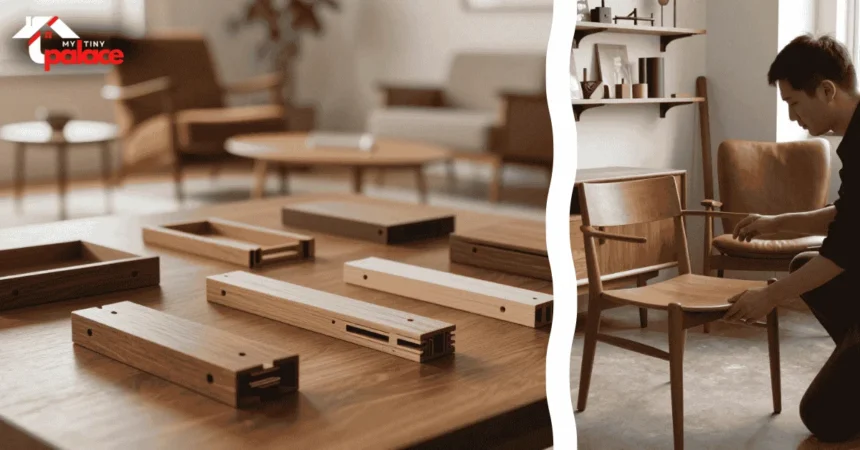
Learning to spot MCM furniture joinery opens up the world of high-quality mid-century pieces. Skilled craftsmen used special techniques to make furniture both durable and beautiful. By looking at these details, you can tell real vintage items from fake ones.


Identifying High-Quality Teak and Walnut Veneers
Many collectors look at the surface materials to judge a piece’s value. Teak and walnut veneers were used in top-quality furniture, often over solid wood. Look for grain patterns that go all the way around a cabinet or drawer.
Rosewood was also prized for luxury, but oak was used in more practical items. Check if the veneer is peeling or if it’s over particle board. Real pieces have veneer that feels solid and looks seamless, a hallmark of quality in vintage furniture.
Spotting Plywood and Fiberglass in Modern Designs
Real mid-century design often used new materials like molded plywood and fiberglass. Look for wood layers in chairs or tables to spot molded plywood. These layers should be tight and even, showing the maker’s skill.
Also, check the inside drawers for dovetail joints, a sign of great craftsmanship in authentic pieces. If you see modern hardware like plastic glides or screws, it’s probably a fake. Look for maker marks or stamps on the underside and inside drawers to help in identifying authentic pieces.
Authenticating Vintage Pieces Through Physical Inspection
When searching for authentic mid-century modern items, inspecting them is key. You can learn a piece’s true history by looking at its build and hidden signs. This method helps you buy real vintage items, not fake ones.
Verifying Authenticity in Eames Lounge Chairs and Tulip Tables
To spot real mid-century furniture, look for specific stamps. For an Eames lounge chair and ottoman, find a Herman Miller logo on the underside or back. These marks prove it’s the real deal.
For a tulip dining table, check the underside of chairs or the table base. Real pieces have a circular label or an embossed signature from reputable furniture makers. An egg chair’s base hardware should also match the era’s manufacturing details.
Detecting Signs of Restoration Versus Original Condition
Telling a restored item from a genuine one is crucial for collectors. Look for signs of gentle wear, which means the vintage furniture item is still in good shape. A natural patina on wood or leather is a sign of authenticity.
Be wary of items that seem heavily refinished, hiding their grain or texture. Vintage mid-century furniture should show age signs that a good restoration keeps. Check the underside and joints to find real pieces with historical value. Choose items that show honest wear over those that look too new.
Navigating the Market for Authentic Mid-Century Modern Furniture
Finding real mid-century modern furniture takes patience and a keen eye. Whether you’re a seasoned collector or just starting, the search is exciting. Learning the market helps you find pieces that add timeless style to your home, especially vintage furniture.
Going to a local estate sale is a great way to find treasures at good prices. When buying vintage items in person, check the construction to make sure they’re real. Arriving early lets you grab quality items before others do.
For a more curated experience, work with a trusted vintage dealer. They specialize in mid-century modern items and offer provenance for identifying authentic pieces. Online marketplaces also have a wide range of furniture from all over the country.
When looking at mid-century items, think about their condition, designer, and rarity. Buying second-hand and vintage needs care, so ask for detailed photos of the items with damage to ensure you are getting an original piece. Choosing well-preserved pieces ensures your investment lasts.
Building a collection of modern pieces should match your style. Focus on quality over quantity to make sure your pieces last. With these tips, you can grow your collection while enjoying the history of each item.
Conclusion
Getting good at finding real furniture takes time and effort. You start as a casual buyer but become a true collector by following these tips.
Real value comes from a piece’s history and quality. Look for brands like Herman Miller or Knoll for top-notch furniture. Make sure every item you buy is a genuine original piece.
Buying furniture is more than just getting chairs or tables. It connects you to a time of great creativity in mid-century modern furniture design. Each piece shows the work of designers like Charles and Ray Eames or George Nelson.
Keep exploring estate sales and special galleries. Talk about your finds with others to learn more. Your dedication helps keep mid-century modern design alive for others to enjoy.